

Cassy Rutherford is our Learning and Communications Manager
Meaningful learning comes from bringing together evidence, creating space for reflection and being prepared to adapt what we do.
When we launched our Impact and Insights Framework (IIF) in early 2025, our aim was to create a clear and consistent way of understanding the difference we are making as a funder, the outcomes our grant holders are contributing to, and our collective contribution to broader social change, while learning from the evidence emerging across our work.
By creating a clear line of sight between the long-term change we want to see in Scotland and our day-to-day work, the IIF helps us move beyond simply tracking activity. It enables us to understand what the evidence says and how we can use these findings to inform our decisions. Over the past year, we've been putting that ambition into practice.
One year of the IIF
So far, we've published four reports exploring Financial Security , Work Pathways , Education Pathways and Nurturing Relationships . Each has combined analysis of the wider context with learning from our grant holders' end-of-year and evaluation reports to help us understand what's changing, what challenges remain and what we, and the wider system, should do next.
A defining feature of the IIF has been our collective sense-making events. Since our first half-day online session for grant holders in February 2025, these have evolved into full-day, in-person events that bring together people from across the system to reflect on evidence and shape future action.
The events create space for people with lived experience, delivery organisations, funders and policy makers to learn alongside one another. Rather than simply presenting findings, we explore what the evidence is telling us collectively, where opportunities for change exist, and how we can work together to improve outcomes for people and communities experiencing, or at risk of, poverty and trauma in Scotland.
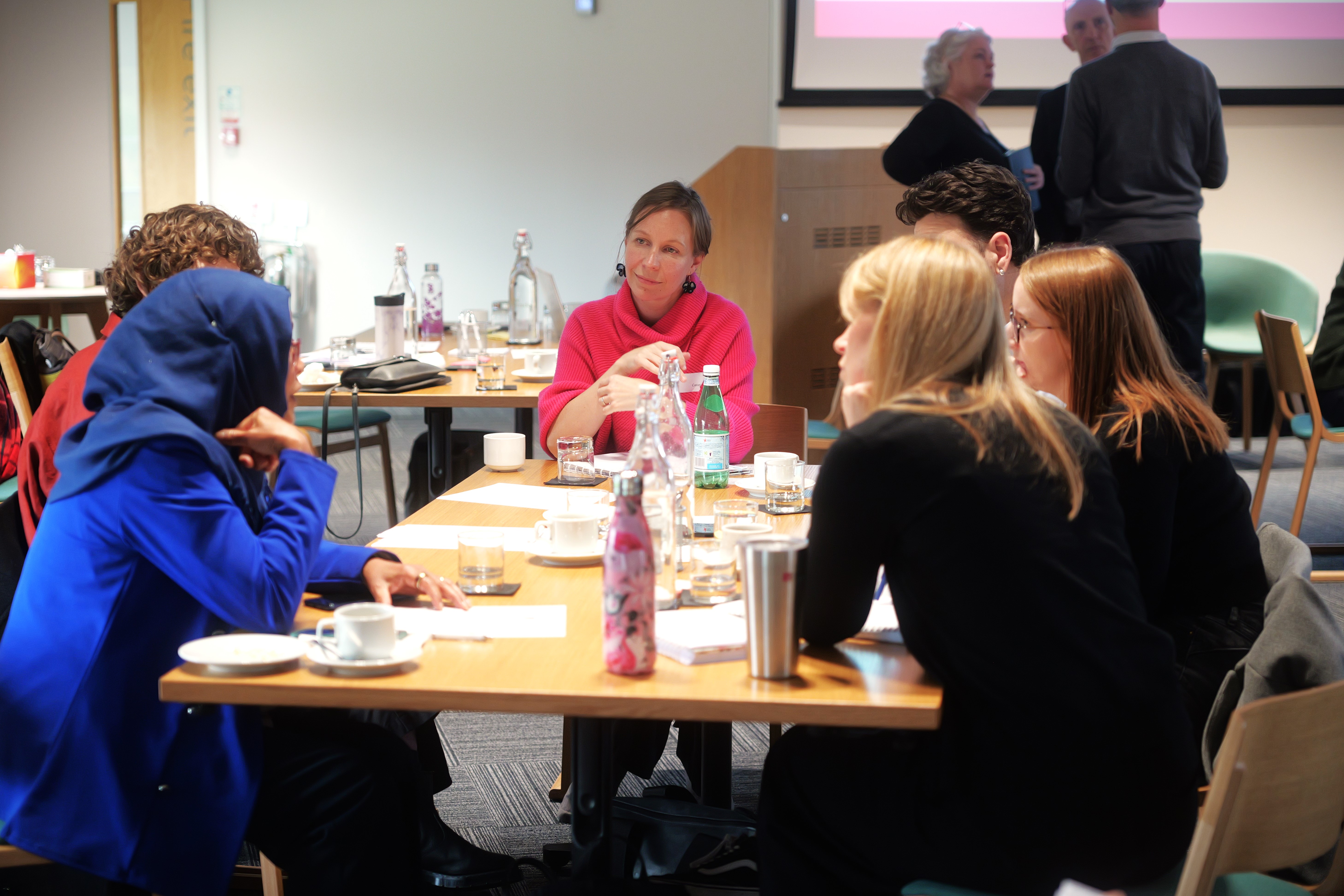
Nurturing Relationships Collective Sensemaking Event, November 2025
Participant feedback has consistently highlighted how valuable these events are as spaces for collaboration and shared learning:
“The collective sense making events have allowed us to make connections and to think as a collective what are the systems change that we were trying to bring about and how can we do that together. I think it’s of real value to adopt that process so that it doesn’t feel like a competitive space that you’re in, but it’s genuinely collaborative and wanting to share learning with each other." The Robertson Trust Grant Holder
Bringing together perspectives that are not often in the same room helps break down silos and while the conversations certainly don't shy away from the complexity of the issues, they are also characterised by a sense of optimism about what can be achieved when we work together.
What we've learned
One of the biggest lessons from the past year is that meaningful learning comes from bringing together different forms of evidence, creating opportunities for reflection and being prepared to adapt what we do in response.
Internally, we've already seen a shift in how learning informs our work. Conversations with staff and Trustees are becoming more strategic, with evidence playing a greater role in shaping decisions. Our reports don't provide all the answers, but they do help us make collective, values-based judgements that are grounded in evidence and aligned with our mission.
We've also shared our approach with other funders through the Institute for Voluntary Action Research (IVAR), the Association of Charitable Foundations (ACF) and the Esade Centre for Social Impact's European Community of Practice on Impact and Measurement. This has helped us benchmark our approach and strengthen our thinking.
Crucially, those conversations have reinforced the idea that our IIF shouldn't be fixed. It should continue evolving as our learning grows and as the needs of the Trust and the wider sector change. This need for flexibility has already shaped its next stage.
What's next
When we began last year, we expected to repeat the same annual cycle, exploring one of our four primary themes each quarter. However, after completing the first cycle, it became clear that the long-term changes we and our partners are working towards won't be fully visible within a 12-month period.
As a result, we'll continue monitoring our four primary themes this year through lighter-touch reports, drawing on a smaller sample of grant holder evidence and without holding a collective sense-making event for each one. Our first report is due to be shared in Autumn which will focus on our theme of Financial Security, with a deep dive on food insecurity.
Alongside this, we're taking a deeper look at the pillars set out in our three-year delivery plan, Change Takes Trust.
The plan reflects an evolution in how we see our role. While funding remains at the heart of what we do, we are increasingly working towards becoming a social change organisation. This reflects both the long-term shifts needed to reduce poverty and trauma in Scotland and the limits of traditional funding models on their own.
Independent funders can only ever be one part of a large and complex picture. To contribute effectively, we need to be more collaborative, better connected to the people and places we are here to serve, more cross-sectoral and more catalytic in our approach.
Change Takes Trust is therefore built around five pillars that describe how we believe we can contribute to lasting social change:
- Developing systems change funding
- Focusing further on prevention
- Empowering communities and working across sectors
- Growing our influence
- Building capacity for social change
These pillars are underpinned by a commitment to continually improve and innovate in how we work.
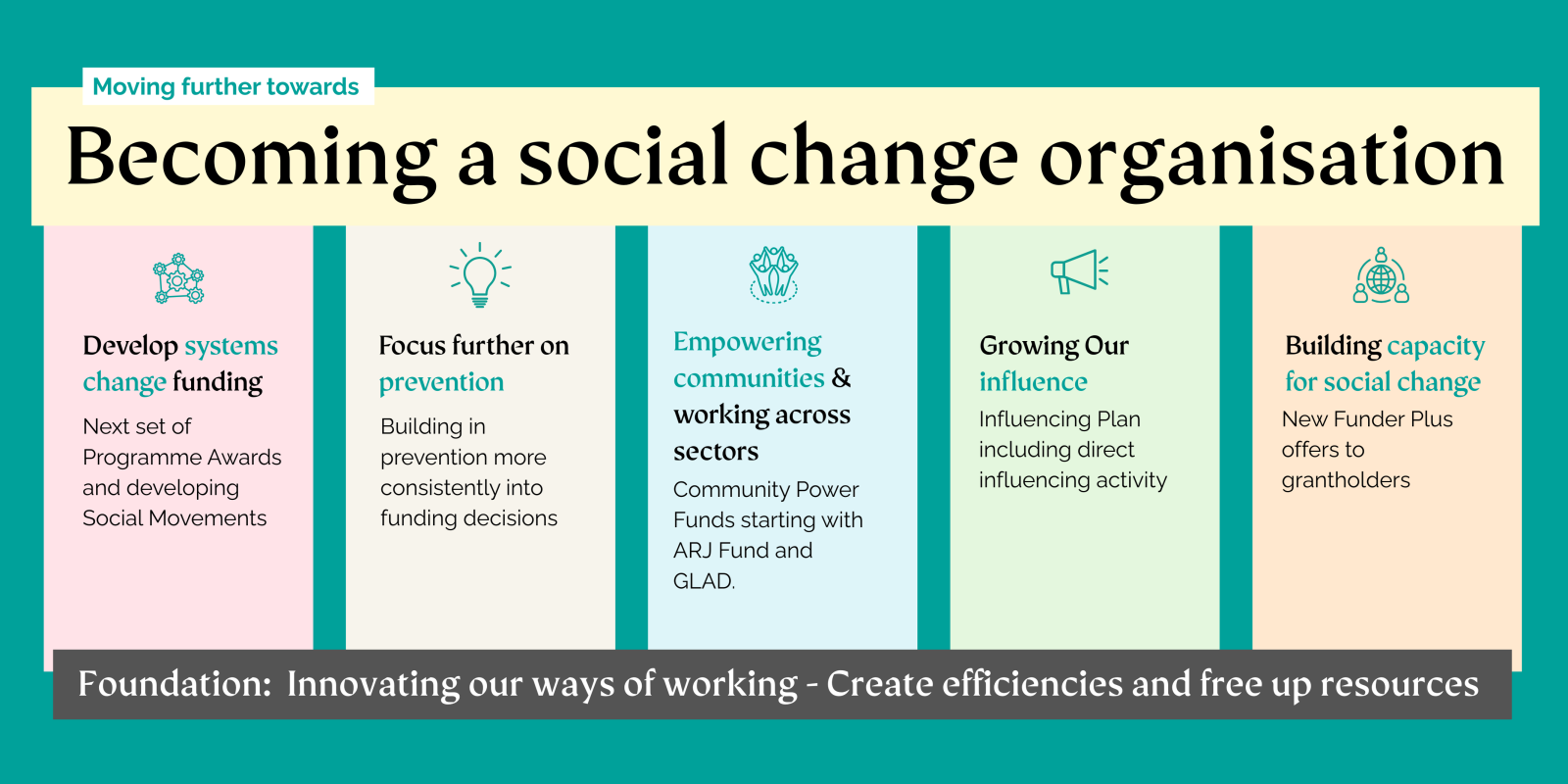
The pillars of our Change Takes Trust delivery plan. These will be the focus of our IIF this year.
The first IIF focus will be on three of these pillars: empowering communities, systems change and prevention. You can read our Chief Executive Jim McCormick's recent blog, Prevent, shift, empower: springing the trap of poverty , with the report due to follow in autumn.
By taking a deeper dive into these pillars through our IIF, we're aiming to build a richer understanding of how different aspects of our work contribute to lasting change, where we're making the greatest difference, and where we need to adapt or do more.
Later this year, we'll also use the IIF to explore our impact on influencing and building capacity for social change, broadening our understanding of the different ways we contribute beyond our grant making.
Looking ahead
As our IIF continues to evolve, so too will the questions we ask. We're already exploring potential areas of focus for next year, including our climate commitment, equity, diversity, participation and rights (EDPR), and the ways our primary themes intersect.
We hope the insights generated through our IIF will be useful not only for our own work, but for grant holders, other funders, policy makers and others working to reduce poverty and trauma in Scotland. If you have thoughts, questions or ideas, we'd love to hear from you.
