
 This project was funded through our Work Pathways theme. Find out more about this theme here.
Naomi Taylor, Project Manager at Close the Gap, shares learning from their newly published report, Strengths not Stigma: Research on fair work for young mothers. This research concludes the first stage of a two-year partnership between Close the Gap and Save the Children. The partnership project, Fair Work for Young Mothers, is funded through the The Robertson Trust's Big Change Grants under our Work Pathways theme.
The purpose of the project is to gather evidence on young mothers’ labour market experiences and use this to influence employment practice and policymaking so young mothers have increased access to fair work and reduced poverty. The project will also produce a campaign led by a Young Mums advisory group targeting young mothers so that they better understand their employment rights. The aim is to improve job quality for young mothers by tackling the systemic labour market barriers which trap them in in-work poverty.
What is the potential change this work could lead? Creating more fair work for young mothers, reducing women's in-work poverty and therefore child poverty.
Rather than asking how young mothers can adapt to existing systems, we ask how the policymaking on the labour market, childcare, social security, and employers can better meet young mothers' needs.
What is this project working to achieve?
Close the Gap and Save the Children Scotland are delivering a two-year project to explore and address the barriers young mothers aged 16-25 face in Scotland's labour market, particularly around in-work poverty and sustaining fair work. Young mothers are among the groups most marginalised by labour market inequalities, yet their experiences are largely absent from policymaking and employer practice.
At the heart of the project is an eight-member group of Research and Campaign Advisers made up of young mothers with experience of low income and in-work poverty. Alongside a Stakeholder Advisory Group, they have helped shape the research, recommendations, policy influencing activity, and employment rights campaign.
Our aim is to ensure young mothers can access, sustain, and progress in fair work that reflects their skills, ambitions, and supports a better future for themselves and their children.
How do poverty and trauma figure in your work?
Poverty is central to the project. Children in households where the mother is under 25 have the highest poverty rate of any of the Scottish Government's priority family groups, with 55% living in poverty. Around 42% of young mothers experience in-work poverty, demonstrating that employment alone is not always enough to provide financial security.
Young women’s labour market inequality begins long before motherhood. Occupational segregation concentrates young women in lower-paid, insecure roles such as caring, administration, and customer service. When young women become mothers and take on disproportionate responsibility for childcare, they are further disadvantaged by the lower pay and limited progression opportunities which characterise female-dominated, part-time work.
Our research shows that poverty constrains the choices available to young mothers. Participants described difficult trade-offs involving childcare costs, benefit entitlement, education, training, and paid work. Decisions about employment were often less about preference and more about managing financial risk and meeting their families’ needs.
Trauma and adversity can intensify these challenges. Our approach to this project is therefore intersectional. Domestic abuse, care experience, poor mental health, disability, housing insecurity, migration, racism, being a lone parent, and having additional caring responsibilities often intersect with poverty and employment insecurity.
Participants described feeling anxious, overwhelmed, and exhausted by systems that failed to reflect the realities of their lives. Rather than asking how young mothers can adapt to existing systems, we ask how the policymaking on the labour market, childcare, social security, and employers can better meet young mothers' needs.
What has funding enabled your organisation to deliver so far?
Funding from The Robertson Trust has enabled Close the Gap and Save the Children Scotland to build a dedicated partnership, establish the Research and Campaign Advisers group, and create a landmark new evidence base on young mothers' experiences of paid work.
So far, this has enabled us to deliver important new research, Strengths not Stigma: Research on fair work for young mothers, which brings together existing evidence, labour market analysis, interviews with 32 young mothers, and a survey of 281 Scottish employers. The research has made young mothers' experiences more visible, challenged damaging stereotypes, identified significant evidence gaps, set out the action needed to deliver change, and created a strong foundation for influencing policy and employer practice.
What are the biggest barriers facing young mothers?
The barriers identified by the research are structural, interconnected, and mutually reinforcing.
Childcare is one of the most significant barriers. Participants described provision as unaffordable, unavailable, or insufficiently flexible, particularly for children under two, disabled children, and children with additional support needs. A lack of suitable childcare often limited the jobs, hours, and opportunities available to them.
Many young mothers were also navigating low-paid and insecure work, with limited access to progression opportunities. Working patterns, transport challenges, caring responsibilities, poor health, domestic abuse, and a lack of support networks could all make accessing and sustaining employment more difficult.
Our employer survey highlighted an important tension between employers’ stated perceptions and young mothers’ experiences. Employers frequently described young mothers as hardworking, resilient and committed, but were also less likely to view them as ambitious or career focused. Around one quarter considered hiring a young mother to be a risk for their business, while half identified flexible working as an operational challenge. The findings point to persistent, gendered assumptions about motherhood and care that negatively affect young mothers, and limit access to opportunities and progression.
A key finding of the research is that young mothers are not lacking in ambition, motivation, or commitment. On the contrary, participants consistently described motherhood as a source of resilience, determination, and purpose. The challenge lies not with young mothers themselves, but with the systems, structures, and attitudes that constrain their choices and limit their opportunities in the labour market.
What changes would you like to see over the next decade?
These barriers are not new, and they are not something that individual young mothers can or should solve on their own. They require action from decision makers with the power to create change.
We want to see systems change.
This means affordable, flexible, and inclusive childcare; secure work with predictable hours and the Real Living Wage as a minimum; strong protection from discrimination; and accessible routes into skills development and progression.
We also want young mothers to be prioritised within Scotland's work on child poverty, fair work, childcare, employability, and equality. Policymaking and service design should centre intersectional analysis that reflects the experiences of disabled, care-experienced, migrant, racially minoritised, and lone-parent young mothers, as well as young mothers affected by domestic abuse.
Above all, the challenge is not to change young mothers’ aspirations, but to address the structural inequalities that constrain their choices.
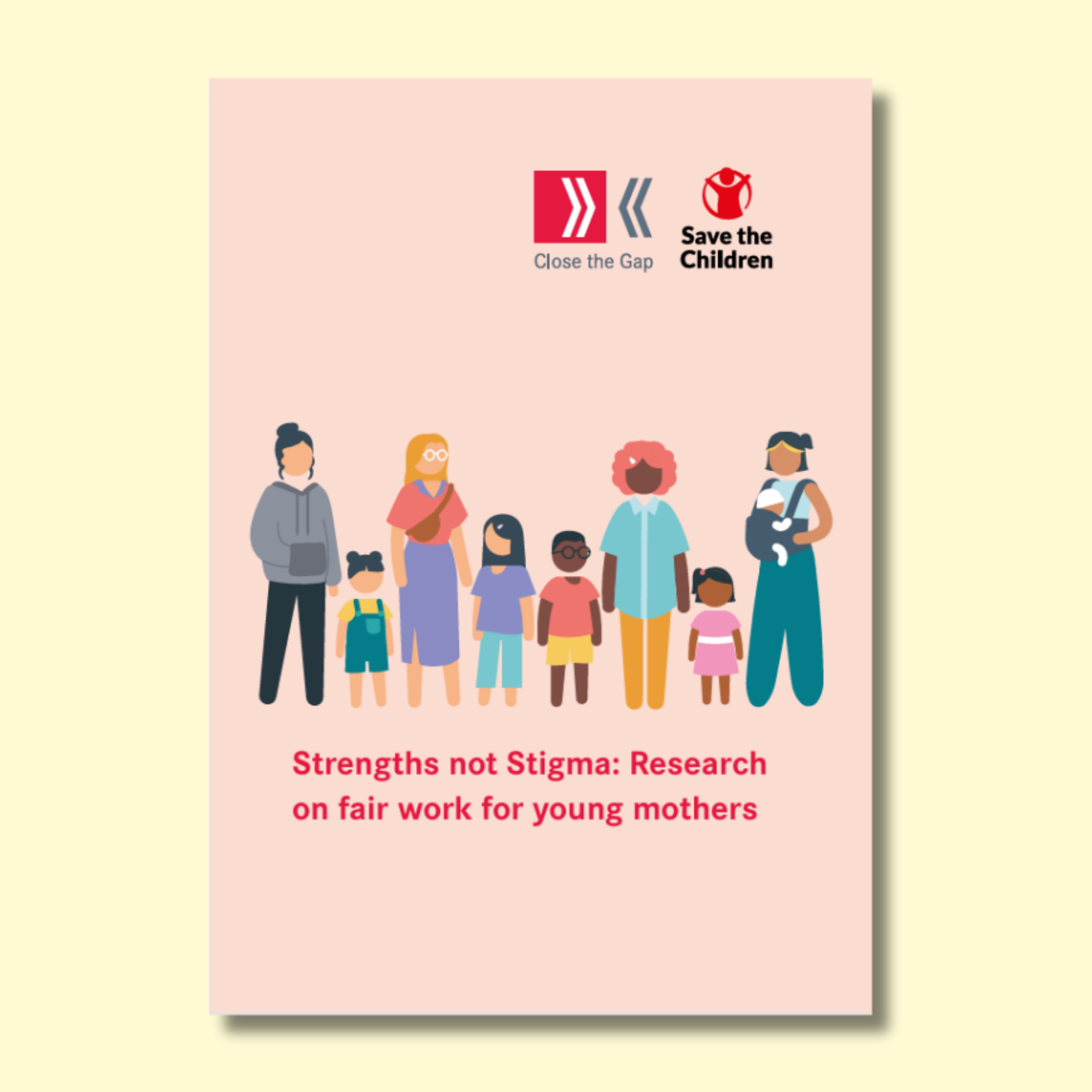
Read Close the Gap's Strength not Stigma: Research on fair work for young mothers.