
Helene Rodger is the Director at Passion4Fusion
This project was funded through our Nurturing Relationships theme. Find out more about this theme here.
We believe that having people represented at decision making spaces who truly understand the challenges faced in their community would create a significant positive shift. It's crucial that those directly affected by these challenges are involved in crafting the solutions.
What is Passion4Fusion working to achieve?
Passion4Fusion was formed by a group of multicultural community volunteers with a shared determination to support the equality needs of Black and Brown young people and families in the Edinburgh and West Lothian area. We mainly work with young people from migrant, refugee and asylum seeking backgrounds and their families, who typically originate from African nations.
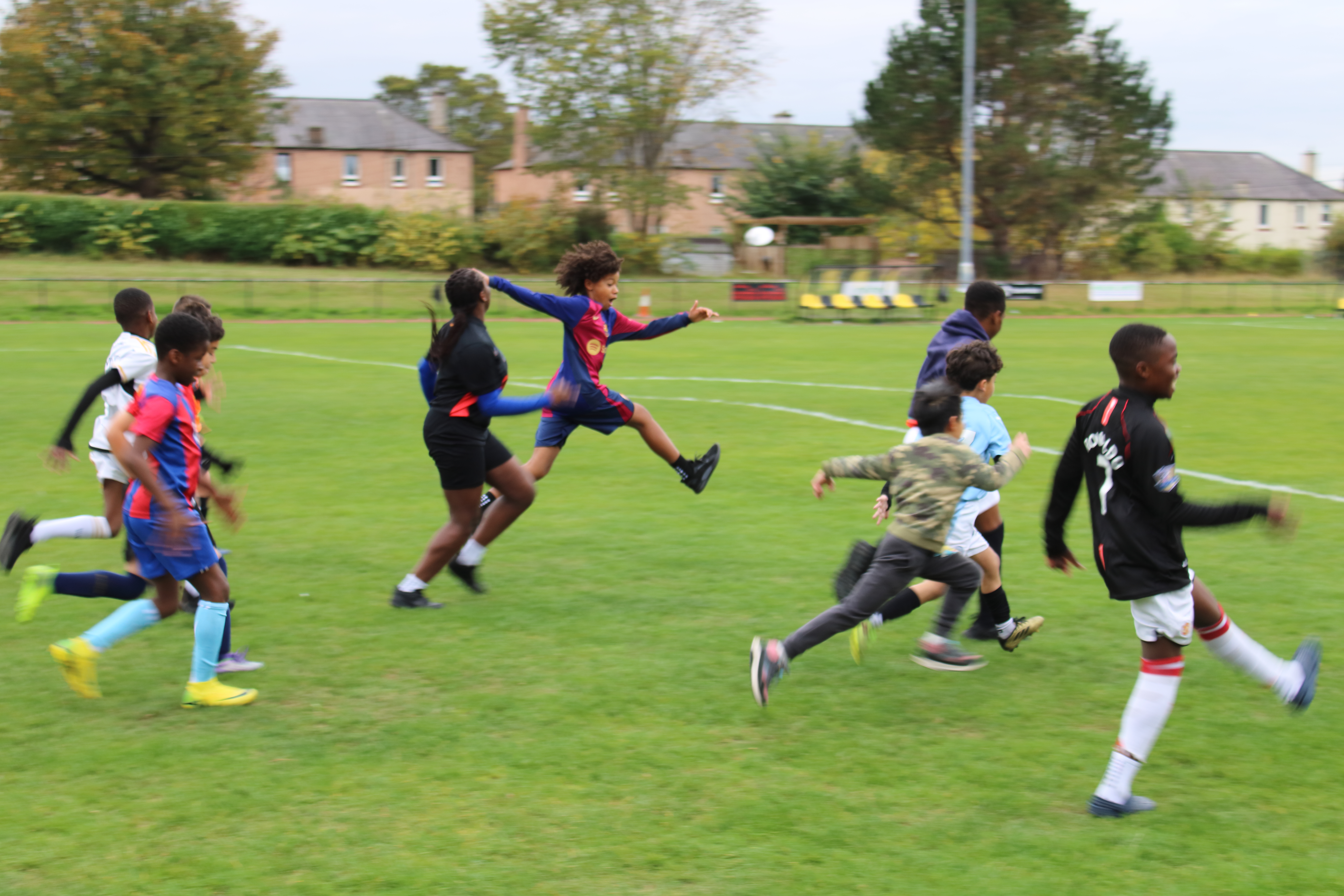
Our goal is to empower Black and Brown people to be active citizens in Scotland. We achieve our aims through various projects and services, ranging from sports and arts, empowering and advocating on behalf of young people, and celebrating our multicultural heritage to promote integration and build cohesive communities.
Where are you focusing your support right now?
We are widely recognised for our youth work and our support for young people as they navigate different phases of their lives. A key focus of our work is youth empowerment, especially through leadership programs.
Mental health and well-being also play a central role in what we do. It's a complex and often stigmatised subject in our community, with a significant gap in services that are culturally sensitive and inclusive. A large part of our efforts is dedicated to addressing this gap and responding to the specific needs of our community.
In addition, we take a holistic approach to supporting young people and their families. This includes our work with The Promise over the past 18 months, where we’ve taken a two-pronged approach: advocating for better support for Black and Brown families in key services, and providing training to the workforce to promote inclusivity and diversity in the workplace. Most recently, we developed a toolkit for the workforce, and we had the opportunity to present this at the Scottish Parliament.
How do poverty and trauma figure in your work?
When people come to Scotland as a migrant, refugee or asylum seeker, they can often experience migration trauma, often linked to coming from countries where there have been traumatic experiences. On top of this, the limitations of the current immigration system, especially around access to work and education, can immediately push people into poverty, putting them at a significant disadvantage from the very start.
Many of the individuals we work with are highly qualified and possess a wide range of skills, yet they are unable to secure meaningful employment. This often leads to low wages, limited working hours, and a ripple effect that impacts housing, essential needs, and overall well-being.
We also see that discrimination can lead to disengagement in our communities. Many people feel disempowered by their experiences upon arrival and struggle to navigate the system due to a lack of understanding. At Passion4Fusion, we draw on our own lived experiences to help bridge this gap, ensuring people understand the system, know their rights, and are aware of the key services available to them.
What elements of your services are working well?
At the core of our work lies a deep and meaningful partnership with the parents of the young people we support. We believe this partnership is one of our greatest strengths and a unique way of working. Our connection to solutions is most powerful when we engage directly with parents. This collaboration enables us to take a holistic approach to family support, ensuring that we address not just the needs of the young person, but the whole family. By building strong, trusting relationships with parents, we create an open line of communication that allows them to feel heard, supported, and empowered alongside their children.
We understand that the strength of a community lies in its ability to come together and support each other. That's why we place a strong emphasis on early intervention. When new families arrive in our community, our outreach team is there to make them feel welcome from the start. We actively work to build connections, offering guidance, and fostering a sense of belonging. This proactive approach helps families integrate into the community and ensures they don’t feel isolated as they navigate new challenges.
Although we’re a small team, we have a big heart, and this is reflected in everything we do.
How can funders support your work?
One of the key changes we believe could make a real difference is for funders to ring-fence funding for smaller community groups like ours. The funding landscape is currently very competitive, and because we’re not as well-known as larger third-sector organisations, securing funding can be a challenge for smaller, lesser-known groups.
Building relationships and connecting with community groups is something we strongly advocate for. Demonstrating the full scope of our work and impact in an application or report can be difficult, but when funders take the time to see our work first hand, the difference we’re making for young people becomes much more apparent.
We also believe that having people represented at decision making spaces who truly understand the challenges faced in their community would create a significant positive shift. It's crucial that those directly affected by these challenges are involved in crafting the solutions.
Lastly, we encourage funders to continue supporting initiatives that are proven to work and have a lasting impact, rather than constantly seeking new or different projects. Those of us working closely with communities know what truly makes a difference, but often feel pressured to reinvent the wheel in order to secure funding.
What long term system changes would best address the issues?
To address the long-term issues facing our communities, we believe that one of the most crucial system changes is better representation in policy and service design. It’s essential that those who are making decisions truly understand the realities and challenges faced by the communities they aim to support. Too often, decisions are made in “glass houses,” with a disconnect from the lived experiences of those they are trying to support. This creates significant barriers to effective change, particularly when those making decisions lack cultural awareness or an understanding of the community’s specific needs.
There also has to be safe spaces and platforms where people can question, challenge, and speak out without fear of retaliation or discrimination. In many cases, communities and organisations like ours face systemic discrimination, and it can be challenging to raise critical issues. The lack of safe, open spaces to discuss the changes we would like to see fosters a sense of powerlessness, but creating these spaces would empower marginalised communities, giving them the voice and agency needed to drive meaningful change.