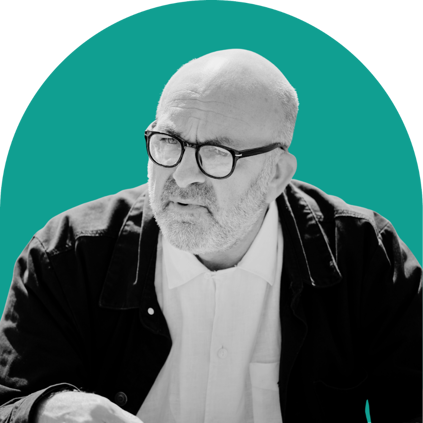
Geoff Leask is the Dundee Coordinator at Whats Matter To You
This project was funded through our Nurturing Relationships theme. Find out more about this theme here.
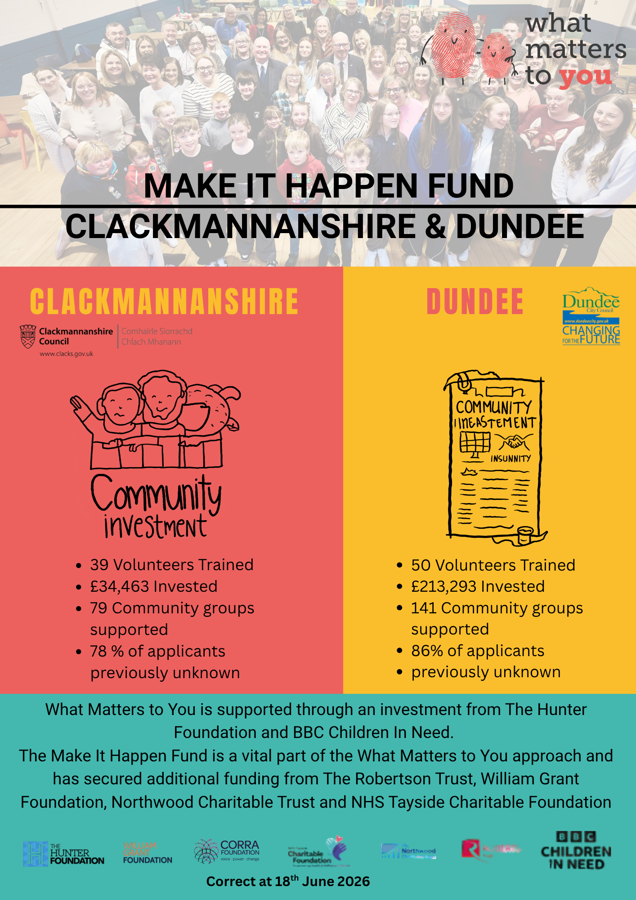
In this piece, Geoff Leask, WM2U Dundee Coordinator, talks about the Make it Happen Fund, a grant programme that supports projects and initiatives creating positive change in local communities.
The fund, which received a Programme Award from The Robertson Trust (now known as Big Change Grants), is run by local people for local people. Its aim is to support and empower community groups by providing funding for initiatives that address local needs and strengthen communities.
What makes the fund unique is its community-led approach. Families help set funding priorities and shape the application process, while parents, carers, children and young people play a direct role in deciding how funding is allocated. This ensures investment reaches projects that matter most to local people and supports initiatives that may otherwise be overlooked by traditional funding schemes.
We have seen the power and impact of communities deciding on where to invest small pots of money and this should continue but we want to supplement this by building on the community’s skills to lead large-scale and multi-sectoral partnerships which aim to eliminate child poverty and reduce dramatically inequalities.
Tell us more about the fund and what it aims to achieve?
The Make it Happen Fund (MIHF) aimed to improve whole family outcomes by starting with an emphasis on building the trust and confidence of local communities in their own decision-making skills - from identifying needs; establishing the criteria; designing the application process and making the final decisions. Supporting the communities leadership was almost more important than the funds available for community groups.
Since 2025, the community leadership of past, current and new panel members has provided a platform for literally hundreds of new groups to deliver activities that work for their communities and families in Dundee and Clackmannanshire.
Where are you focusing your support right now?
In our first 18 months, grant sizes varied from a few hundred pounds to the current highest level of grant at £4,992. Through the ‘Celebration’ events that are held after each round of funding we are enabling new relationships between groups to be made and highlighting opportunities for groups to secure further funding and support creating a more connected community ecosystem.
We have seen the power and impact of communities deciding on where to invest small pots of money and this should continue but we want to supplement this by building on the community’s skills to lead large-scale and multi-sectoral partnerships which aim to eliminate child poverty and reduce dramatically inequalities. We will be testing this in Dundee and maintaining close links with partners in Clackmannanshire.
What elements of your service or activities have made the biggest difference for those you work with?
Investing in the support and necessary training to enable community panel members who have had no previous involvement with grant making, to have complete control over the whole process. Through the involvement in the MIHF we have seen significant growth in confidence, resilience and aspiration for the future by members of the Panel who are now widely referenced as ‘Community Leaders’. This includes examples where people have returned to education, taken steps to participate in other areas of volunteering and progressed towards employment. The return on investment of the equivalent of around 2 days for each panel was more than repaid.
How do poverty and trauma figure in your work?
The Make it Happen Fund has only operated in the areas of Dundee and Clackmannanshire with the highest rates and concentration of child poverty. All the projects funded by the panels are led and run by local communities in response to the needs identified by them. Those involved in the Panel bring the full spectrum of true lived experience and have real understanding of the impact of poverty and trauma in their community. This knowledge is critical in aiding the reach of the MIHF to those who are seeking to respond to community issues and making decisions about who should be funded.
How can funders support your work?
We have had excellent support from funders. The Make it Happen Fund is funded by a funder partnership of The Hunter Foundation, BBC Children in Need, The Robertson Trust, Northwood Charitable Trust, NHS Tayside Charitable Foundation and William Grant Foundation. The public sector has supported the Fund by working alongside us to recruit, train and support panel members and provide the newly funded groups with critical set up advice, practical support and network connections. Corra, through their previous work in grass roots funds, has provided grant management arrangements, including support to the panels and the newly funded groups.
What are the biggest challenges/barriers facing you as an org and/or those you work with/support?
We are lucky to have funders who understand the importance of handing over power to community panels - essentially putting the rhetoric into practice. They have given us space, time and trust to support communities to be ready to make decisions. By giving the funders first hand opportunities to see the community panels at every stage of the process it has built knowledge and understanding of the potential that exists within communities. We think communities have earned their trust by the superb quality of their decision-making and we are ambitious to extend this model into investments that take place in every aspect of their lives…but never with them in the room. That needs to - and can - change
What changes would you like to see in your area of focus during the next decade?
Community decision-making across every stage of the funding process becomes the norm. Services and supports for families in their localities that require investment across the public sector and by independent funders will be planned, designed and delivered with inclusive and meaningful community leadership in place and receiving parity of esteem across all partnerships.
Find out more about the fund here.