
As Serving the Future reaches the end of its four-year journey, we want to reflect on what the project has achieved, what we learned, and what still lies ahead for the hospitality and tourism sector.
Serving the Future was funded by The Robertson Trust’s Partners in Change programme and delivered by the Fraser of Allander Institute and The Poverty Alliance. Our project launched in 2021 during a period of intense pressure for Scotland’s hospitality sector, marked by Brexit, the pandemic and rising living costs. We began with a clear ambition: to understand, reduce and ultimately prevent in-work poverty in Scotland’s hospitality sector — and, in doing so, help build a stronger and more resilient industry.”
The project adopted an action research approach — collaborating directly with those affected to explore problems, test ideas, and find solutions in real time. This meant that we worked with:
- Workers: Over two years, we worked closely with 27 workers to understand the realities of low-paid hospitality jobs — from progression to financial pressures, job security and what “good work” should look like. Read the full report here.
- Employers: Through Action Learning Sets, we helped employers share challenges and test practical improvements related to recruitment, retention and working conditions. Read more about this work here.
- Industry Leaders: With the Hospitality Skills Group, we explored future scenarios shaped by technology, workforce change and economic pressures, helping the sector plan for the long term. Learn more about the foresight work here.
The insights from this work directly informed our final policy recommendations, focused on fair work, stronger businesses and long-term sector sustainability. Read them here.
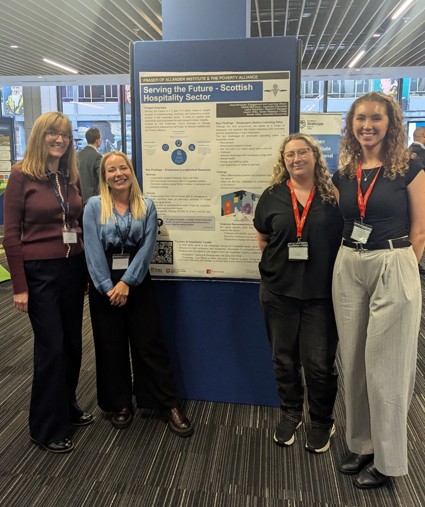
Over the past year, we’ve been sharing these findings with the sector — through events, workshops, networking sessions and media engagement — to get our findings into the hands of the people who can use them.
A major milestone has been launching the Tourism and Hospitality Toolkit, a free online resource developed with sector bodies and workers to provide practical guidance, research and case studies. Explore the Toolkit here or watch the YouTube video.
Key Findings and Takeaways
Across four years of research and collaboration, Serving the Future has built a rich picture of what it’s really like to work, run a business, and support those in Scotland’s hospitality sector. Although every business and individual story is different, some clear themes emerged throughout our work:
1. In-work poverty is widespread, but not inevitable
We saw how unpredictable hours, low pay, and a lack of progression opportunities keep many workers in financially precarious situations. But we also saw clear examples of businesses taking actions to this through better scheduling, improved communication, fair use of tips and more consistent contracts. Change is possible within the sector.
2. Hospitality is full of opportunity, but many workers struggle to access it
Many workers see real potential in hospitality but struggle to build stable careers due to low pay, variable hours and limited training pathways. Workers want progression, and employers want to offer it, but resources and support can be barriers.
3. Employers care about their staff, but face real pressures
Tight margins, rising costs and ongoing uncertainty make it difficult for businesses to commit to long-term changes, even when they value fair work. Employers repeatedly emphasised the need for stability, long-term planning and support tailored to the sector.
4. Fair work is good for business
When employees experienced better job quality - more predictable hours, clearer communication or better pathways into training - they often reported stronger recruitment and retention. Fair work isn’t just a “nice to have”, it can be a real business advantage.
5. The sector needs more than workplace fixes alone
Issues such as childcare, transport and housing strongly influence whether people can work in hospitality and sustain a career. These structural barriers require national and local policy action. Some employers also raised concerns about being undercut by competitors who do not follow fair work practices, highlighting potential roles for regulation in creating a level playing field.
6. There is appetite for change
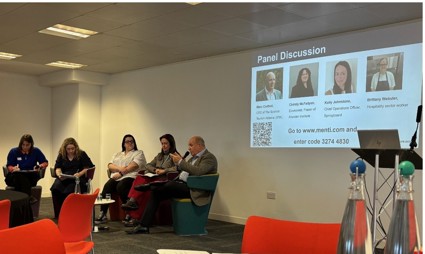
Despite years of economic and workforce pressures, almost everyone we engaged with demonstrated openness and a desire to build a fairer, more sustainable sector. At our final learning event, The Future of Scottish Hospitality and Tourism, participants expressed optimism and highlighted the need for ongoing collaboration, stronger worker voice, long-term workforce planning and tools like the new Toolkit to support improvement.
What We Learned as Researchers
The project taught us what it takes to create meaningful change in a diverse and fast-moving sector. One of our biggest tasks was navigating a wide range of perspective. Employers, industry bodies, unions and workers often experience the industry in very different ways, and at times those perspectives can feel worlds apart. Our role was to build trust, create space for open conversation and ensure all voices were heard, even when the issues are complex or sensitive.
A key lesson was how to share evidence in ways that enable rather than discourage dialogue. With workers and unions, it was important to start with lived experience. With employers, conversations often began with business resilience, retention and workforce sustainability. In all cases, framing helped people connect with the same evidence from angles that felt relevant to them.
We also saw industry leaders engage deeply with workers’ experiences, and many have incorporated project findings into sector strategies. Our employer case studies became particularly important tools, shifting conversations from “why change?” to “how do we do it?
Some more subtle changes, managers such as reviewing tipping policies or trialling annualised contracts, had meaningful impacts on people’s day-to-day working lives and businesses.
What’s Next?
Although the project is ending, we hope the insights, recommendations and Toolkit will continue to inform research, industry practice and policymaking. The Tourism and Hospitality Toolkit will remain available online to support both workers and employers.
A significant next step for the sector is the implementation of the Fair Work Inquiry recommendations, many of which echo what we heard throughout the project. We encourage the Scottish Government to consider these proposals carefully and take forward actions that genuinely support both workers and businesses.
For any questions or further discussion, the teams at the Fraser of Allander Institute and The Poverty Alliance remain available. Finally, we extend our sincere thanks to The Robertson Trust for their support and encouragement in this work over the past four years.