The wrap-around support programme offers Scholars a range of development opportunities designed to help them fulfil their potential and develop the skills needed to reach their career aspirations.
As part of the programme, Scholars should share a short written report at the end of each semester reflecting on how they are progressing through university and to share how they are doing with our dedicated team. This helps us to provide effective support to any Scholar who needs it.
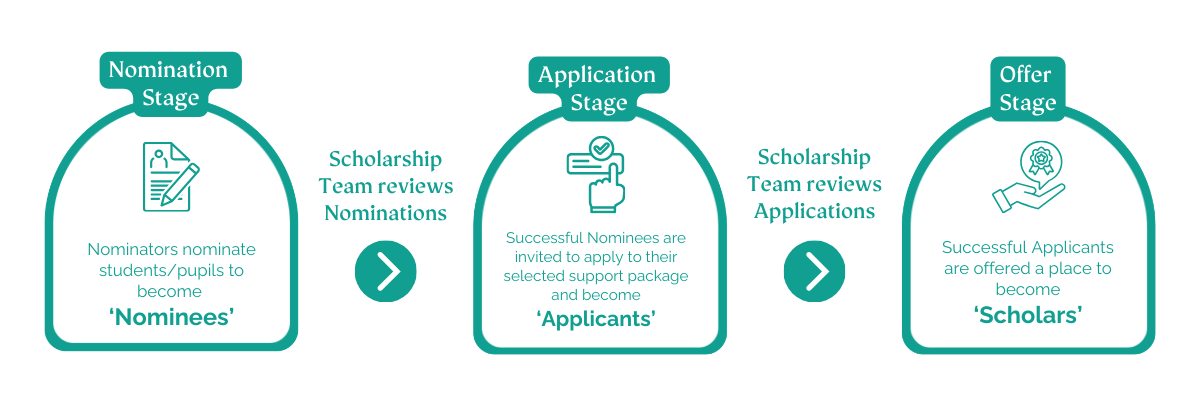
All applications for The Robertson Trust Scholarships are made through nominations from schools, colleges, universities or third sector partners. Nominees are then invited to apply to the Scholarship.
With a higher number of applications than spaces, our team works to ensure that our criteria take account of both financial need and whether each candidate has other experiences that would act as barriers to accessing university, such as being from an under-represented population group or having faced particular life events in their past.
Our overall aim is to prevent and reduce poverty and trauma in Scotland. We want to support prospective scholars who have past or current experience of poverty and trauma and have a significant risk of experiencing this in the future. The programme has been designed to support prospective scholars who have the drive and potential to access university, but not necessarily the money to do so, and we rely on the schools, colleges, universities and third sector partners we work with to help identify the most eligible candidates based on our guidelines below.
In order to apply for a Robertson Trust Scholarship Support Package, you need to be nominated by a school, college, university or third sector partner. We do not accept direct applications from students or families.
This year we are piloting a partnership approach with the Schools for Higher Education Programme (SHEP) to support our nomination process and help to support schools to identify young people who would benefit the most from the scholarship programme and would be most likely to be successful in applying. This is for school nominations only. Schools should reach out to their relevant SHEP Lead (Focus West, Aspire North, LEAPs, or Lift Off) for additional support.
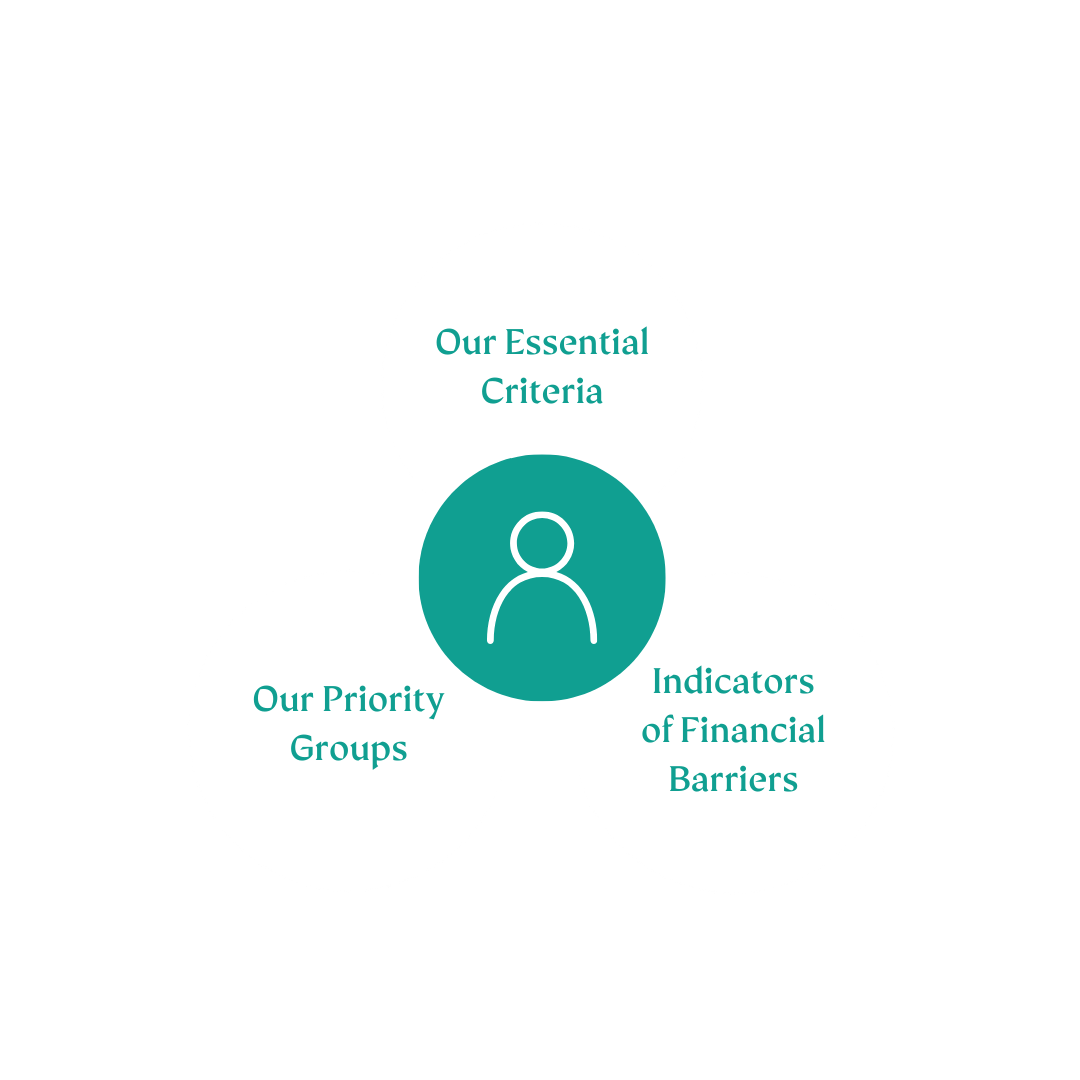
Applicants must meet all Essential Criteria, outlined below, in order for us to consider their application. Our Priority Groups, also outlined below, highlight the groups we aim to support through the Scholarship programme. Once we receive a nomination, we send the nominee the application form and other resources to help them apply and ask our nominators to complete a reference, telling us a little about their candidate’s background and why they meet our essential criteria.
When considering each application, we acknowledge the difficulty some candidates may face in describing personal challenges, but these should be balanced with examples of resilience, positive outlook and connectivity with their local community as a celebration of their abilities.
Please refer to the Application Infographic for more information on our process in 2025 - please note: our processes may change each year.
All applications must be nominated by one of our partner schools, colleges or universities according to the following guidelines:
Please note, that we are unable to consider any nomination that does not meet all the above essential criteria.
We are particularly interested in supporting students who face financial barriers to accessing and participating at university and face other barriers to accessing university (for example belonging to an under-represented population group or having faced life events that could make going to university less likely).

Indicators of Financial Need:
The Robertson Trust Scholarship aims to support young people who experience significant financial barriers to accessing university. Experiencing financial barriers means not having enough money to cover essential living costs, such as rent, bills, food, and clothing.
In our application process we are looking for strong evidence of financial need from the young person applying. The following are examples of financial circumstances that might indicate financial need in young people accessing university:
Other barriers:
The Robertson Trust Scholarship aims to support young people who have experienced other barriers to accessing university, in addition to financial barriers. This could include belonging to an underrepresented population group and/or having faced life events that make accessing university more difficult than it would otherwise be.
Being under-represented in higher education means certain groups of students have lower rates of participation because they experience systemic barriers not experienced by the majority of the student population. As such, these groups may be less likely to attend and stay at university without additional support.
Underrepresented groups that may face barriers:
Life events that may form barriers:
We will also aim to support individuals with current or past experiences that could act as barriers to entering university. This could include personal or family experiences of multiple disadvantages, such as homelessness, substance misuse, domestic violence, mental ill-health or other disruptive life events affecting their childhood or home life. This could also include those who have experienced deep poverty or very low income. We encourage our educational partners to nominate individuals who have faced such challenges for the Scholarship.
While we recognise the complexity of the personal challenges and socio-economic issues many potential candidates may be experiencing, we will also ask them to provide the following information in the application form:

Please note that only The Robertson Trust Scholarship Team members have access to any information applicants share in deciding about their application. The Scholarship Team includes our external alumni assessors, who may review an anonymised version of an application as part of our assessment process. As former recipients of The Robertson Trust Scholarship, our external assessors bring their lived experience to the assessment process and are provided with training to ensure a rigorous and equitable assessment process for all applicants. For further information about how we handle this information please read our Privacy Statement.

If you are a staff member from a school, college, university or third sector partner and would like to find out about the application process, please refer to the updates on our landing page and email scholars@therobertsontrust.org.uk.
To ensure we are targeting those most at risk of future poverty, we have developed a support package that moves beyond our current 16-25 undergraduate bursary and non-financial support.
We are aware that many who face challenges in their younger life, such as but not limited to, being care experienced, estranged and/or with caring responsibilities may take longer to access and complete higher education level study. As such, we have developed a Mature Student Support Package.
Closed Nominations
Please note, this pilot support package is currently only accessible through partner nomination. This is to reduce demand whilst we test and evaluate this new offer. As such, only those who have been put forward by our nominating partners will be eligible to apply. We will review this for AY26/27. Please check back here for updates.
Applicants must meet all Essential Criteria, outlined below, in order for us to consider their application. Our Priority Groups, also outlined below, highlight the groups we aim to support through the Scholarship programme. Once we receive a nomination, we send the nominee the application form and other resources to help them apply.
When considering each application, we acknowledge the difficulty some candidates may face in describing personal challenges, but these should be balanced with examples of resilience, positive outlook and connectivity with their local community as a celebration of their abilities.
All applications must be nominated by one of our partners according to the following guidelines:
Please note, that we are unable to consider any nomination that does not meet all the above essential criteria.
We are particularly interested in supporting students who face financial barriers to accessing and participating at university and face other barriers to accessing university (for example belonging to an under-represented population group or having faced life events that could make going to university less likely).

Indicators of Financial Need:
The Mature Support Package aims to support people who experience significant financial barriers to accessing university. Experiencing financial barriers means not having enough money to cover essential living costs, such as rent, bills, food, and clothing.
We recognise the additional pressures faced by students trying to attend university while experiencing additional financial barriers. Because of the stress they can cause, these barriers can prevent students from participating fully in their education and getting the most out of their time at university. In addition, those who have experienced financial barriers earlier in life, especially during their childhood, can take longer to access and complete higher education.
We view financial barriers as including:
Other barriers:
The Mature Support Package aims to support people who have experienced other barriers to accessing university, in addition to financial barriers. This could include belonging to an underrepresented population group and/or having faced life events that make accessing university more difficult than it would otherwise be.
Being under-represented in higher education means certain groups of students have lower rates of participation because they experience systemic barriers not experienced by the majority of the student population. As such, these groups may be less likely to attend and stay at university without additional support.
Underrepresented groups that may face barriers:
Life events that may form barriers:
We will also aim to support individuals with current or past experiences that could act as barriers to entering university. This could include personal or family experiences of multiple disadvantages, such as homelessness, substance misuse, domestic violence, mental ill-health or other disruptive life events affecting their childhood or home life. This could also include those who have experienced deep poverty or very low income. We encourage our educational partners to nominate individuals who have faced such challenges for the Scholarship.
While we recognise the complexity of the personal challenges and socio-economic issues many potential candidates may be experiencing, we will also ask them to provide the following information in the application form:

Please note that only The Robertson Trust Scholarship Team members have access to any information applicants share in deciding about their application. The Scholarship Team includes our external alumni assessors, who may review an anonymised version of an application as part of our assessment process. As former recipients of The Robertson Trust Scholarship, our external assessors bring their lived experience to the assessment process and are provided with training to ensure a rigorous and equitable assessment process for all applicants. For further information about how we handle this information please read our Privacy Statement.
To ensure we are targeting those most at risk of future poverty, we are interested in developing a financial support offer that moves beyond our current 16-25 undergraduate bursary and non-financial support.
We are aware that many who face challenges in their younger life, such as but not limited to, being care experienced, estranged and/or with caring responsibilities may take longer to access and complete higher education level study. In addition, for parents who are currently facing poverty, there are high barriers to access education which prevents not only the individual, but the entire family unit from moving out of poverty and poverty related trauma. As such, we have developed a Student Parent Support Package.
Closed Nominations
Please note, this pilot support package is currently only accessible through partner nomination. This is to reduce demand whilst we test and evaluate this new offer. As such, only those who have been put forward by our nominating partners will be eligible to apply. We will review this for AY26/27. Please check back here for updates.
Applicants must meet all Essential Criteria, outlined below, in order for us to consider their application. Our Priority Groups, also outlined below, highlight the groups we aim to support through the Scholarship programme. Once we receive a nomination, we send the nominee the application form and other resources to help them apply.
When considering each application, we acknowledge the difficulty some candidates may face in describing personal challenges, but these should be balanced with examples of resilience, positive outlook and connectivity with their local community as a celebration of their abilities.
All applications must be nominated by one of our partners
Please note, that we are unable to consider any nomination that does not meet all the above essential criteria.
We are particularly interested in supporting students who face financial barriers to accessing and participating at university and face other barriers to accessing university (for example belonging to an under-represented population group or having faced life events that could make going to university less likely).

Indicators of Financial Need:
The Student Parent Scholarship aims to support parents who experience significant financial barriers to accessing higher education study. Experiencing financial barriers means not having enough money to cover essential living costs, such as rent, bills, food, and clothing.
We recognise the additional pressures faced by students trying to attend university while experiencing additional financial barriers. Because of the stress they can cause, these barriers can prevent students from participating fully in their education and getting the most out of their time at university. In addition, those who have parenting responsibilities while studying can face additional financial and other barriers, which can mean it can take longer to access and complete higher education.
We view financial barriers as including:
Other barriers:
The Student Parent Support Package aims to support parents who have experienced other barriers to accessing university, in addition to financial barriers. This could include belonging to an underrepresented population group and/or having faced life events that make accessing university more difficult than it would otherwise be.
Being under-represented in higher education means certain groups of students have lower rates of participation because they experience systemic barriers not experienced by the majority of the student population. As such, these groups may be less likely to attend and stay at university without additional support.
Underrepresented groups that may face barriers:
Life events that may form barriers:
We will also aim to support individuals with current or past experiences that could act as barriers to entering university. This could include personal or family experiences of multiple disadvantages, such as homelessness, substance misuse, domestic violence, mental ill-health or other disruptive life events affecting their childhood or home life. This could also include those who have experienced deep poverty or very low income. We encourage our educational partners to nominate individuals who have faced such challenges for the Scholarship.
While we recognise the complexity of the personal challenges and socio-economic issues many potential candidates may be experiencing, we will also ask them to provide the following information in the application form:

Please note that only The Robertson Trust Scholarship Team members have access to any information applicants share in deciding about their application. The Scholarship Team includes our external alumni assessors, who may review an anonymised version of an application as part of our assessment process. As former recipients of The Robertson Trust Scholarship, our external assessors bring their lived experience to the assessment process and are provided with training to ensure a rigorous and equitable assessment process for all applicants. For further information about how we handle this information please read our Privacy Statement.
To ensure we are targeting those most at risk of future poverty, and conscious many of our priority groups access Higher Education through the college route, we are interested in developing a financial support offer that moves beyond our current 16-25 undergraduate bursary and non-financial support.
We are aware that many who face challenges in their younger life, such as but not limited to, being care experienced, estranged and/or with caring responsibilities may take longer to access and complete higher education level study. This may be as a result of not achieving their desired grades, due to difficult life circumstances. For many, the college route offers a more accessible alternative to higher education level study, including alternative pedagogies from the formal university route.
In addition, by offering degree level study in low-income communities through partnership degrees, students can benefit from reduced barriers to HE level study such as lack of finances, inability to relocate (either due to financial barrier or caring responsibilities) or disinclination to relocate due to ties to community or part time work. Such degree routes also offer an increase in opportunity and employability within local communities.
Closed Nominations
Please note, this pilot support package is currently only accessible through partner nomination. This is to reduce demand whilst we test and evaluate this new offer. As such, only those who have been put forward by our nominating partners will be eligible to apply. We will review this for AY26/27. Please check back here for updates.
Applicants must meet all Essential Criteria, outlined below, in order for us to consider their application.
Our Priority Groups, also outlined below, highlight the groups we aim to support through the Scholarship programme. Once we receive a nomination, we send the nominee the application form and other resources to help them apply.
When considering each application, we acknowledge the difficulty some candidates may face in describing personal challenges, but these should be balanced with examples of resilience, positive outlook and connectivity with their local community as a celebration of their abilities.
Essential Criteria
All applications must be nominated by one of our partners
Please note, that we are unable to consider any nomination that does not meet all the above essential criteria.
Our Priority Groups
We are particularly interested in supporting students who face financial barriers to accessing and participating at university and face other barriers to accessing university (for example belonging to an under-represented population group or having faced life events that could make going to university less likely).

Indicators of Financial Need:
The Articulation Student Support Package aims to support students who experience significant financial barriers to accessing higher education level study. Experiencing financial barriers means not having enough money to cover essential living costs, such as rent, bills, food, and clothing.
We recognise the additional pressures faced by students trying to attend education while experiencing additional financial barriers. Because of the stress they can cause, these barriers can prevent students from participating fully in their education and getting the most out of their time in study. In addition, those who have experienced financial barriers earlier in life, especially during their childhood, can take longer to access and complete higher education.
We view financial barriers as including:
Other barriers:
The Articulation Student Support Package aims to support people who have experienced other barriers to accessing university, in addition to financial barriers. This could include belonging to an underrepresented population group and/or having faced life events that make accessing university more difficult than it would otherwise be.
Being under-represented in higher education means certain groups of students have lower rates of participation because they experience systemic barriers not experienced by the majority of the student population. As such, these groups may be less likely to attend and stay at on course without additional support.
Underrepresented groups that may face barriers:
Life events that may form barriers:
We will also aim to support individuals with current or past experiences that could act as barriers to entering university. This could include personal or family experiences of multiple disadvantages, such as homelessness, substance misuse, domestic violence, mental ill-health or other disruptive life events affecting their childhood or home life. This could also include those who have experienced deep poverty or very low income. We encourage our educational partners to nominate individuals who have faced such challenges for the Scholarship.
The Application Form:
While we recognise the complexity of the personal challenges and socio-economic issues many potential candidates may be experiencing, we will also ask them to provide the following information in the application form:

Application Confidentiality
Please note that only The Robertson Trust Scholarship Team members have access to any information applicants share in deciding about their application. The Scholarship Team includes our external alumni assessors, who may review an anonymised version of an application as part of our assessment process. As former recipients of The Robertson Trust Scholarship, our external assessors bring their lived experience to the assessment process and are provided with training to ensure a rigorous and equitable assessment process for all applicants. For further information about how we handle this information please read our Privacy Statement.
This year we are piloting a partnership approach with the Schools for Higher Education Programme (SHEP) to support our nomination process and help to support schools to identify young people who would benefit the most from the scholarship programme and would be most likely to be successful in applying. This is for school nominations only. Schools should reach out to their relevant SHEP Lead (Focus West, Aspire North, LEAPs, or Lift Off) for additional support.
Applicants must meet all Essential Criteria, outlined below, in order for us to consider their application. Our Priority Groups, also outlined below, highlight the groups we aim to support through the Scholarship programme. Once we receive a nomination, we send the nominee the application form and other resources to help them apply and ask our nominators to complete a reference, telling us a little about their candidate’s background and why they meet our essential criteria.
When considering each application, we acknowledge the difficulty some candidates may face in describing personal challenges, but these should be balanced with examples of resilience, positive outlook and connectivity with their local community as a celebration of their abilities.
Please refer to the Application Infographic for more information on our process in 2025 - please note: our processes may change each year.
All applications must be nominated by one of our partner schools, colleges or universities according to the following guidelines:
Please note, that we are unable to consider any nomination that does not meet all the above essential criteria.
We are particularly interested in supporting students who face financial barriers to accessing and participating at university and face other barriers to accessing university (for example belonging to an under-represented population group or having faced life events that could make going to university less likely).

Indicators of Financial Need:
The Robertson Trust Scholarship aims to support young people who experience significant financial barriers to accessing university. Experiencing financial barriers means not having enough money to cover essential living costs, such as rent, bills, food, and clothing.
In our application process we are looking for strong evidence of financial need from the young person applying. The following are examples of financial circumstances that might indicate financial need in young people accessing university:
Other barriers:
The Robertson Trust Scholarship aims to support young people who have experienced other barriers to accessing university, in addition to financial barriers. This could include belonging to an underrepresented population group and/or having faced life events that make accessing university more difficult than it would otherwise be.
Being under-represented in higher education means certain groups of students have lower rates of participation because they experience systemic barriers not experienced by the majority of the student population. As such, these groups may be less likely to attend and stay at university without additional support.
Underrepresented groups that may face barriers:
Life events that may form barriers:
We will also aim to support individuals with current or past experiences that could act as barriers to entering university. This could include personal or family experiences of multiple disadvantages, such as homelessness, substance misuse, domestic violence, mental ill-health or other disruptive life events affecting their childhood or home life. This could also include those who have experienced deep poverty or very low income. We encourage our educational partners to nominate individuals who have faced such challenges for the Scholarship.
While we recognise the complexity of the personal challenges and socio-economic issues many potential candidates may be experiencing, we will also ask them to provide the following information in the application form:

Please note that only The Robertson Trust Scholarship Team members have access to any information applicants share in deciding about their application. The Scholarship Team includes our external alumni assessors, who may review an anonymised version of an application as part of our assessment process. As former recipients of The Robertson Trust Scholarship, our external assessors bring their lived experience to the assessment process and are provided with training to ensure a rigorous and equitable assessment process for all applicants. For further information about how we handle this information please read our Privacy Statement.
If you are a staff member from a school, college, university or third sector partner and would like to find out about the application process, please refer to the updates on our landing page and email scholars@therobertsontrust.org.uk.
To ensure we are targeting those most at risk of future poverty, we have developed a support package that moves beyond our current 16-25 undergraduate bursary and non-financial support.
We are aware that many who face challenges in their younger life, such as but not limited to, being care experienced, estranged and/or with caring responsibilities may take longer to access and complete higher education level study. As such, we have developed a Mature Student Support Package.
Closed Nominations
Please note, this pilot support package is currently only accessible through partner nomination. This is to reduce demand whilst we test and evaluate this new offer. As such, only those who have been put forward by our nominating partners will be eligible to apply. We will review this for AY26/27. Please check back here for updates.
Applicants must meet all Essential Criteria, outlined below, in order for us to consider their application. Our Priority Groups, also outlined below, highlight the groups we aim to support through the Scholarship programme. Once we receive a nomination, we send the nominee the application form and other resources to help them apply.
When considering each application, we acknowledge the difficulty some candidates may face in describing personal challenges, but these should be balanced with examples of resilience, positive outlook and connectivity with their local community as a celebration of their abilities.
All applications must be nominated by one of our partners according to the following guidelines:
Please note, that we are unable to consider any nomination that does not meet all the above essential criteria.
We are particularly interested in supporting students who face financial barriers to accessing and participating at university and face other barriers to accessing university (for example belonging to an under-represented population group or having faced life events that could make going to university less likely).

Indicators of Financial Need:
The Mature Support Package aims to support people who experience significant financial barriers to accessing university. Experiencing financial barriers means not having enough money to cover essential living costs, such as rent, bills, food, and clothing.
We recognise the additional pressures faced by students trying to attend university while experiencing additional financial barriers. Because of the stress they can cause, these barriers can prevent students from participating fully in their education and getting the most out of their time at university. In addition, those who have experienced financial barriers earlier in life, especially during their childhood, can take longer to access and complete higher education.
We view financial barriers as including:
Other barriers:
The Mature Support Package aims to support people who have experienced other barriers to accessing university, in addition to financial barriers. This could include belonging to an underrepresented population group and/or having faced life events that make accessing university more difficult than it would otherwise be.
Being under-represented in higher education means certain groups of students have lower rates of participation because they experience systemic barriers not experienced by the majority of the student population. As such, these groups may be less likely to attend and stay at university without additional support.
Underrepresented groups that may face barriers:
Life events that may form barriers:
We will also aim to support individuals with current or past experiences that could act as barriers to entering university. This could include personal or family experiences of multiple disadvantages, such as homelessness, substance misuse, domestic violence, mental ill-health or other disruptive life events affecting their childhood or home life. This could also include those who have experienced deep poverty or very low income. We encourage our educational partners to nominate individuals who have faced such challenges for the Scholarship.
While we recognise the complexity of the personal challenges and socio-economic issues many potential candidates may be experiencing, we will also ask them to provide the following information in the application form:

Please note that only The Robertson Trust Scholarship Team members have access to any information applicants share in deciding about their application. The Scholarship Team includes our external alumni assessors, who may review an anonymised version of an application as part of our assessment process. As former recipients of The Robertson Trust Scholarship, our external assessors bring their lived experience to the assessment process and are provided with training to ensure a rigorous and equitable assessment process for all applicants. For further information about how we handle this information please read our Privacy Statement.
To ensure we are targeting those most at risk of future poverty, we are interested in developing a financial support offer that moves beyond our current 16-25 undergraduate bursary and non-financial support.
We are aware that many who face challenges in their younger life, such as but not limited to, being care experienced, estranged and/or with caring responsibilities may take longer to access and complete higher education level study. In addition, for parents who are currently facing poverty, there are high barriers to access education which prevents not only the individual, but the entire family unit from moving out of poverty and poverty related trauma. As such, we have developed a Student Parent Support Package.
Closed Nominations
Please note, this pilot support package is currently only accessible through partner nomination. This is to reduce demand whilst we test and evaluate this new offer. As such, only those who have been put forward by our nominating partners will be eligible to apply. We will review this for AY26/27. Please check back here for updates.
Applicants must meet all Essential Criteria, outlined below, in order for us to consider their application. Our Priority Groups, also outlined below, highlight the groups we aim to support through the Scholarship programme. Once we receive a nomination, we send the nominee the application form and other resources to help them apply.
When considering each application, we acknowledge the difficulty some candidates may face in describing personal challenges, but these should be balanced with examples of resilience, positive outlook and connectivity with their local community as a celebration of their abilities.
All applications must be nominated by one of our partners
Please note, that we are unable to consider any nomination that does not meet all the above essential criteria.
We are particularly interested in supporting students who face financial barriers to accessing and participating at university and face other barriers to accessing university (for example belonging to an under-represented population group or having faced life events that could make going to university less likely).

Indicators of Financial Need:
The Student Parent Scholarship aims to support parents who experience significant financial barriers to accessing higher education study. Experiencing financial barriers means not having enough money to cover essential living costs, such as rent, bills, food, and clothing.
We recognise the additional pressures faced by students trying to attend university while experiencing additional financial barriers. Because of the stress they can cause, these barriers can prevent students from participating fully in their education and getting the most out of their time at university. In addition, those who have parenting responsibilities while studying can face additional financial and other barriers, which can mean it can take longer to access and complete higher education.
We view financial barriers as including:
Other barriers:
The Student Parent Support Package aims to support parents who have experienced other barriers to accessing university, in addition to financial barriers. This could include belonging to an underrepresented population group and/or having faced life events that make accessing university more difficult than it would otherwise be.
Being under-represented in higher education means certain groups of students have lower rates of participation because they experience systemic barriers not experienced by the majority of the student population. As such, these groups may be less likely to attend and stay at university without additional support.
Underrepresented groups that may face barriers:
Life events that may form barriers:
We will also aim to support individuals with current or past experiences that could act as barriers to entering university. This could include personal or family experiences of multiple disadvantages, such as homelessness, substance misuse, domestic violence, mental ill-health or other disruptive life events affecting their childhood or home life. This could also include those who have experienced deep poverty or very low income. We encourage our educational partners to nominate individuals who have faced such challenges for the Scholarship.
While we recognise the complexity of the personal challenges and socio-economic issues many potential candidates may be experiencing, we will also ask them to provide the following information in the application form:

Please note that only The Robertson Trust Scholarship Team members have access to any information applicants share in deciding about their application. The Scholarship Team includes our external alumni assessors, who may review an anonymised version of an application as part of our assessment process. As former recipients of The Robertson Trust Scholarship, our external assessors bring their lived experience to the assessment process and are provided with training to ensure a rigorous and equitable assessment process for all applicants. For further information about how we handle this information please read our Privacy Statement.
To ensure we are targeting those most at risk of future poverty, and conscious many of our priority groups access Higher Education through the college route, we are interested in developing a financial support offer that moves beyond our current 16-25 undergraduate bursary and non-financial support.
We are aware that many who face challenges in their younger life, such as but not limited to, being care experienced, estranged and/or with caring responsibilities may take longer to access and complete higher education level study. This may be as a result of not achieving their desired grades, due to difficult life circumstances. For many, the college route offers a more accessible alternative to higher education level study, including alternative pedagogies from the formal university route.
In addition, by offering degree level study in low-income communities through partnership degrees, students can benefit from reduced barriers to HE level study such as lack of finances, inability to relocate (either due to financial barrier or caring responsibilities) or disinclination to relocate due to ties to community or part time work. Such degree routes also offer an increase in opportunity and employability within local communities.
Closed Nominations
Please note, this pilot support package is currently only accessible through partner nomination. This is to reduce demand whilst we test and evaluate this new offer. As such, only those who have been put forward by our nominating partners will be eligible to apply. We will review this for AY26/27. Please check back here for updates.
Applicants must meet all Essential Criteria, outlined below, in order for us to consider their application.
Our Priority Groups, also outlined below, highlight the groups we aim to support through the Scholarship programme. Once we receive a nomination, we send the nominee the application form and other resources to help them apply.
When considering each application, we acknowledge the difficulty some candidates may face in describing personal challenges, but these should be balanced with examples of resilience, positive outlook and connectivity with their local community as a celebration of their abilities.
Essential Criteria
All applications must be nominated by one of our partners
Please note, that we are unable to consider any nomination that does not meet all the above essential criteria.
Our Priority Groups
We are particularly interested in supporting students who face financial barriers to accessing and participating at university and face other barriers to accessing university (for example belonging to an under-represented population group or having faced life events that could make going to university less likely).

Indicators of Financial Need:
The Articulation Student Support Package aims to support students who experience significant financial barriers to accessing higher education level study. Experiencing financial barriers means not having enough money to cover essential living costs, such as rent, bills, food, and clothing.
We recognise the additional pressures faced by students trying to attend education while experiencing additional financial barriers. Because of the stress they can cause, these barriers can prevent students from participating fully in their education and getting the most out of their time in study. In addition, those who have experienced financial barriers earlier in life, especially during their childhood, can take longer to access and complete higher education.
We view financial barriers as including:
Other barriers:
The Articulation Student Support Package aims to support people who have experienced other barriers to accessing university, in addition to financial barriers. This could include belonging to an underrepresented population group and/or having faced life events that make accessing university more difficult than it would otherwise be.
Being under-represented in higher education means certain groups of students have lower rates of participation because they experience systemic barriers not experienced by the majority of the student population. As such, these groups may be less likely to attend and stay at on course without additional support.
Underrepresented groups that may face barriers:
Life events that may form barriers:
We will also aim to support individuals with current or past experiences that could act as barriers to entering university. This could include personal or family experiences of multiple disadvantages, such as homelessness, substance misuse, domestic violence, mental ill-health or other disruptive life events affecting their childhood or home life. This could also include those who have experienced deep poverty or very low income. We encourage our educational partners to nominate individuals who have faced such challenges for the Scholarship.
The Application Form:
While we recognise the complexity of the personal challenges and socio-economic issues many potential candidates may be experiencing, we will also ask them to provide the following information in the application form:

Application Confidentiality
Please note that only The Robertson Trust Scholarship Team members have access to any information applicants share in deciding about their application. The Scholarship Team includes our external alumni assessors, who may review an anonymised version of an application as part of our assessment process. As former recipients of The Robertson Trust Scholarship, our external assessors bring their lived experience to the assessment process and are provided with training to ensure a rigorous and equitable assessment process for all applicants. For further information about how we handle this information please read our Privacy Statement.