A year on since our Community Spaces Fund opened for applications, we're pleased to take this opportunity to share what we're learning from the fund as part of our commitment to learning and continuous improvement.
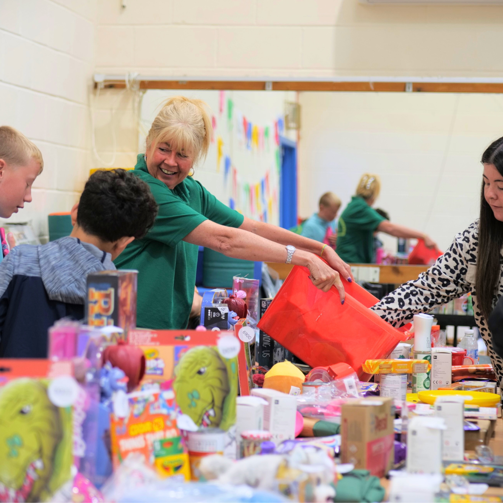
Community Spaces aims to support the costs of community centres, hubs or anchor organisations who are delivering and/or hosting a range of services and activities to meet the needs of their community.
By community, we mean a geographic community, for example, a neighbourhood, village or town. This could be in an urban or rural area experiencing high rates of poverty.
Applicants should show how the various services they deliver and/ or host relate to preventing or reducing poverty and associated trauma for local people.
We are particularly interested in funding applications from organisations who can show how they reach out to and remove barriers for groups of people in their community who are at higher risk of experiencing poverty and associated trauma, such as disabled people, people experiencing racial inequity and asylum seekers and refugees, to ensure that they know about and can access the services and activities on offer in their community space.
We are pleased to have awarded a total of £1,942,500 in Community Spaces to 57 organisations since launching this fund.
Among the awardees include:
The Pearce Institute – £18,ooo p.a. x 3 years towards running costs
Celebrating its 120th anniversary this year, the Pearce Institute in Govan, Glasgow operates a one‑stop‑shop community hub responding to the wide‑ranging needs of local people. Services include a community café and food pantry; income maximisation, welfare support and housing advice; and support groups for New Scots and people experiencing addiction, domestic violence and poor mental health. Alongside these services, it offers weekly social and recreational activities for children, young people and older people, and provides space for other charities working in the Govan area.
Scalloway Youth and Community Centre - £18,000 p.a. x 3 years towards running costs
This organisation operates a multi-purpose centre in Scalloway, Shetland, from which it provides a weekly programme of activities aiming to reduce rural poverty and isolation. Its programme includes Under-5s Mornings, 60+ drop-ins, community lunches, youth clubs, sports sessions and various community events. It also hosts other organisations including The Living Well Hub which provides free advice and support, ensuring local people can access essential services close to home.
Hawkhill Community Association Ltd - £20,000 p.a. x 3 years towards running costs
Based in Alloa, Clackmannanshire, this organisation provides facilities and a range of services for the benefit of the community, with a focus on addressing issues of poverty, unemployment, and isolation. It runs a community shop, providing access to affordable food and low-cost shopping; delivers an after-school club and works with local partners to deliver employment and volunteering opportunities for people who face barriers to accessing these. It is about to launch a Global village cfae, providing a space for new Scots to meet and share different food and culural exchanges with the local community. It also provides affordable lets for local groups and hosts drop-ins with organisations such as the local Citizens Advice Bureau and Family support hub, who provide financial and employment-related advice.
Fox and Friends - £8,000 p.a. x 3 years towards the running costs of the community hub
Fox and Friends runs a community hub in Alness, Highland, from which it offers a range of affordable and accessible activities to address rural poverty and exclusion. These include a weekly men's group, a baby & toddler group, an after-school club, community pop-in sessions, a Community Food Share scheme, a knit and natter group, gardening group, and monthly bingo and afternoon teas. It hosts other local organisations to deliver services and drop-ins such as a family support group, art projects, employability support, wellbeing groups, housing association and adult learning opportunities.
Success Rate
The average success rate for Community Spaces grants is 52%, which is lower than the average across our other funds. We expect this is partially due to this being a newer fund with initial high demand.
We also recognise, however, that elements of our applicant guidance could be clearer about what we will and won’t support through this fund. We have reflected on our first year of delivery and updated our guidance, based on feedback and learning.
Unsuccessful Applications
The main reason Community Spaces applications were unsuccessful is because they did not demonstrate a strong fit with the aims of the fund. We saw some common themes amongst unsuccessful applications, including:
-
Requests which were solely focused on delivery of one activity rather than a broad range e.g. sports or arts activities only. We can fund these types of activity as part of a broader range of services delivered from a community hub or centre, but would not support them in isolation through this Fund.
-
Requests serving a single population group rather than a whole community e.g. older people or people with a long-term health conditions. Our focus through Community Spaces is on whole geographic communities, however, we can fund work to prevent and reduce poverty and associated trauma for specific population groups through our Small and Large Grants funds.
What's next?
We have made some updates to our guidance to be clearer about the aims of this fund and hope that this blog will be helpful in illustrating the types of request we will and won’t support.
You can read our full guidance for Community Spaces and apply here.
